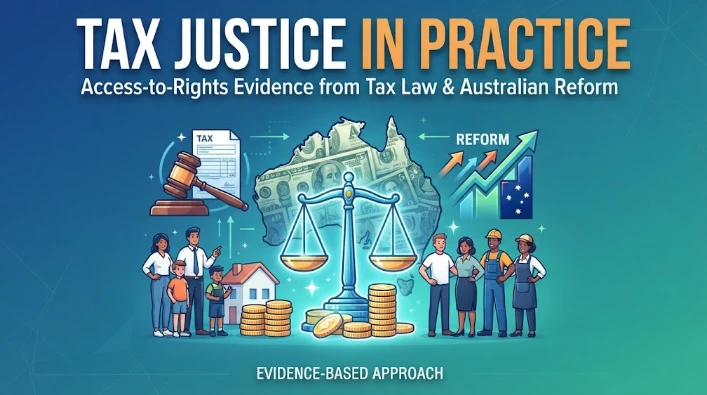
Tax justice is a subject that is often talked about in terms of rates and redistribution, but the access to rights starts with the procedure. A taxpayer should be aware of a requirement, obtain the records, communicate with an authority, disagree with an assessment, and get it reviewed at minimal effort. Complex law can create a formal equality which is an effective unequal one when basic participation requires professional advice. The question of access-to-rights analysis is whether normal individual taxpayers and small businesses can exercise the protections in the tax law.
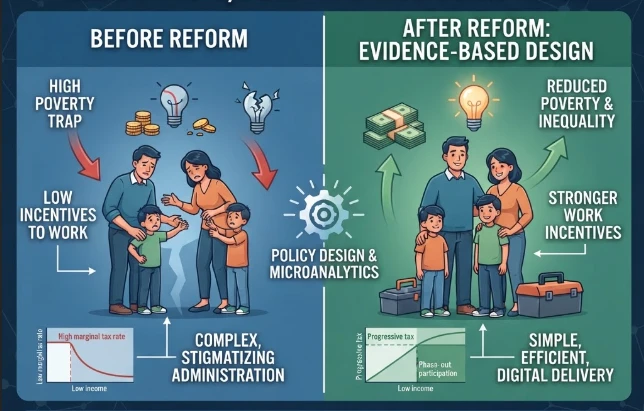
The Australian income tax reform is an example of why tax justice is more than just the headline tax rate. Marginal rates and thresholds changes affect disposable income, but offsets, family circumstances, inflation, superannuation settings and capital income and interactions with transfers also have an impact. The new (revised) personal income tax schedule which took effect on 1 July 2024 adjusted the allocation of legislated tax cuts by income level. That episode reiterated a very fundamental lesson from reform: there is no point in making sweeping statements about fairness without a distributional table and clear assumptions.
Tax knowledge is a second type of justice. Understanding the filing dates, deductible expenses, and business registration, instalments, and review rights can help to avoid unnecessary debt and penalties. The use of literacy should not be used as a replacement for simple law, because even if someone is knowledgeable, he or she will not be able to cope with rules which have several definitions and exceptions. An effective system is one that provides clear direction, fair expectations, and readily available professional/community resources.
The voluntary compliance is also influenced by procedural fairness. An adverse outcome is more easily accepted when reasons are explicit, evidence is taken into account, there are avenues for review, and communication is respectful. The narrow fear-of-audit model of behavioural tax research has thus been replaced. Trust is no substitute for enforcement, but a consistent process can create a more legitimate enforcement and less of a sense that outcomes are based on resources or connections.
A gender lens on tax justice widens the tax-justice lens, as there can be gender-specific impacts of formally neutral rules on labour-market and household patterns. Incidence can be influenced by the differences in paid work, unpaid care, retirement saving, property ownership and consumption. The inequity of a budget, then, may not be based on gender but rather on the allocation of resources to the needs of socio-economic groups. Gender-aware analysis questions: who is treated as the beneficiary of concessions, who is subject to consumption taxes, who is eligible for credits, and how do policy and caregiving influence lifetime earnings.
The spending side of the fairness equation is added in with public finance. There can be a range of opinions on who pays, and tax justice must not be limited to that. It is important to remember that tax revenues fund the following services: health services, education, infrastructure, income support, security, and administration. Fiscal-incidence analysis is used to connect taxes and benefits so as to show the net impact on household resources. This helps to prevent simplistic statements of whether a single tax is fair or not without taking into account the services and transfers provided by the wider tax system.
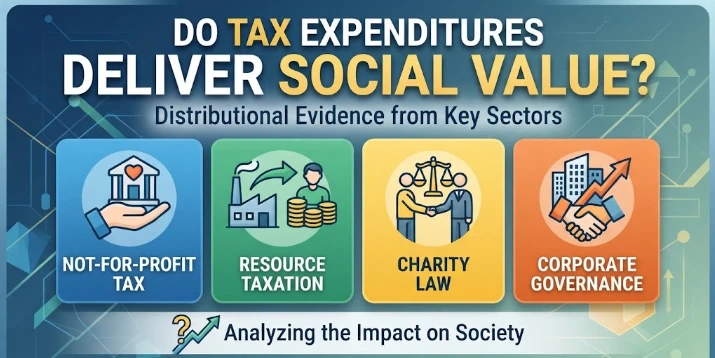
The Tax Expenditures and Insights Statement provides further perspective by providing distributional data on key aspects of the tax system, and by estimating tax revenue lost due to concessions. Such reporting brings deductions, exemptions, concessional rates and deferrals within the realm of ordinary budget scrutiny. A concession may provide a "defendable objective" at the same time that it may also have a high fiscal cost or that it may focus benefits on groups with higher taxable income or wealth. Those trade-offs, when made visible, help fuel public debate, rather than it becoming a battle of slogans.
Disclosure and governance is an area of overlap between company and securities law and tax justice. Information on boards, before investors, auditors, regulatory authorities, and tax authorities is revealed by corporate reporting. Risk assessment can include related party transactions, provisions, deferred tax and uncertain tax positions, and executive incentives. Aggressive tax planning does not go away because of strong governance, but the transparency of the responsibilities and credible oversight make it more difficult to maintain.
The access problem of small businesses is unique, as legal requirements are similar to those of larger businesses, but don't necessarily have the resources and know-how to comply. Only to find the burden compounding when it comes to GST registration, payroll, deductions, record keeping, and entity selection. Simple tax issues can become a real problem if they are not addressed by tax clinics or the availability of guidance. In the long run, however, simplification is the better answer, since support services cannot be a substitute for unnecessary complexity.
Another facet of access and distribution is retirement policy. Tax preferences for saving for retirement or superannuation can also contribute to long term income security, but may be quite different depending on how much one can save, what taxes are charged and what is in the account. Deductible savings for low-income workers are only beneficial if they are an ongoing contribution. The contribution cap, public pension parameters, age, housing costs, and the interaction between public pensions and refundable offsets are taken into account in fair design, as are the preservation rules.
There is a rule-of-law argument as well that has been advanced in the context of advanced tax issues: certainty shall not exist for those who can hire a specialist to interpret. Private rulings, public guidance, safe harbours, and published administrative positions can help to eliminate uncertainty, if access is wide and reasoning is shared. Too much discretion can lead to risk since similar facts can lead to different outcomes. The transparent interpretation is thus a tool of administration as well as a mechanism of justice.
After changes in the tax law, there must also be administrative accessibility. The simplicity of the policy goal can bring transition costs due to new rates, withholding schedules, instalments, software updates, guidance, and objection processes. Those frustrations are felt on the front lines of small businesses and individual taxpayers, where specialist guidance is scarce. Australian tax reform, then, provides a workable access-to-rights criterion: distributional justice, clarity in legislation, effective enforcement, and easy review processes must go hand in hand.
The proportionate application of enforcement must continue. Effective measures to fight the deliberate cheat serve compliant taxpayers and the revenue stream but the heavy-handed measures can have serious repercussions if they are used against those who are truly struggling or misinformed. There must be safeguards, reviews and strict escalation guidelines for debt collection, penalties, garnishment and litigation. A rights-based system does not lump everything into the category of morality, but it does separate out inability, mistakes, avoidance, and fraud.
When access indicators are displayed next to revenue indicators, then reform is believed. Administrations can monitor complaint resolution, review the results, processing time, debt persistence, digital exclusion, clinic referrals, and recurring types of error. This type of data can be the indicator of whether there is less friction or more friction after legal changes. Tax justice is then quantifiable within the day-to-day functioning of institutions, and not solely when talking in terms of statutory rates.
Tax clinics fill that void. The National Tax Clinic program provides tax counsel assistance to eligible persons and small businesses who require assistance in relation to tax matters, and is funded by the government. Clinics also provide learning experiences for supervised students and evidence for problems that tend to occur over and over in administration. The combination is important as individual cases can come up with issues such as debt, record keeping, registration, family situation, access to digital resources or misunderstanding of legal notices.
The practical standard is equal ability to engage in the tax system. That standard calls for understandable rules and affordable assistance, transparent decisions, effective review, and distributional analysis prior to the enactment of reforms. When rights are usable in practice, there is an increased chance that the collection is legitimate, although revenue collection is still needed as it is a prerequisite for funding public services. A good tax system is one that is open to challenge across income and organisational lines, in terms of complexity and enforcement powers as well as tax choices.
Legal design, behavioural response, administrative capacity, and distribution are thus all part of one analytical frame, which ensures a sound evaluation. The real question is whether the rule creates public value net of the fiscal costs of implementation, compliance costs, and unintended consequences. The usefulness of transparency is maximized when assumptions, definitions, limitations and review criteria are made explicit prior to when a policy becomes difficult to change. But that's not a one-dimensional strategy that would be an assurance of fairness, efficiency or responsible behavior to a single headline measure.
The importance of regular evaluation: technology, market structure, household conditions, and administrative capacity evolve more rapidly than do many of the laws. Public authorities should communicate uncertainty rather than statements as predictions of behaviour or revenue, to build credibility.