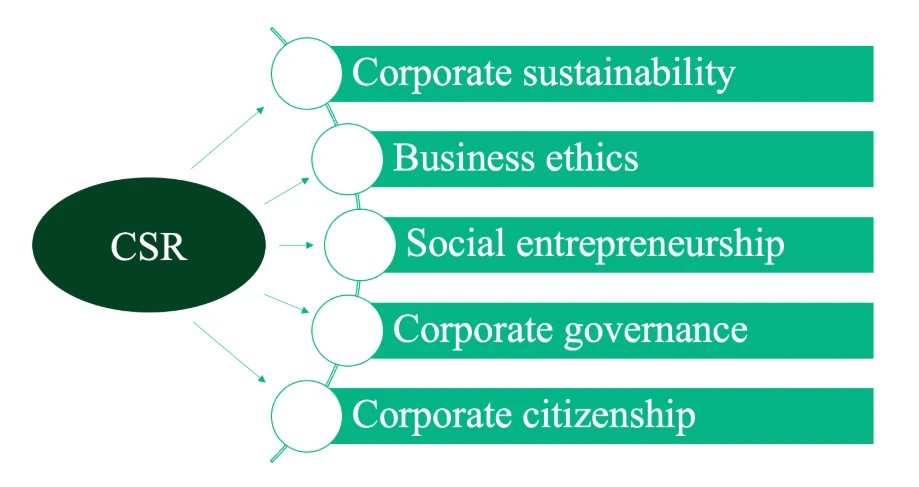
Tax transparency has transcended the dichotomy of timeliness of tax returns. There is a growing focus on tax strategy in the light of corporate governance, sustainability assertions, public backing, and a company's economic impact on communities. The transparent approach helps to interpret how statutory requirements, effective tax results, incentives or losses are linked to cross-border structures, but does not simplify an intricately structured situation to a single headline ratio. Tax is an important component of corporate social responsibility, since it is the source of funding for institutions and infrastructure that rely on commercial activity.
The most effective performance measurement efforts for nonprofits begin when the funders, service providers, staff, and affected communities agree on what success will look like. A funder may require similar evidence for each grant, and a nonprofit may require metrics that measure mission quality rather than just the amount of activity. Co-production is about the balance of the tension, instead of using a distant reporting template, it is about operational knowledge that is brought into metric design. This can lead to a more focused set of indicators with clear definitions, clear ownership and links between resources and activities, outcomes and longer term social value.
Corporate communication brings the opportunity and risk. Explain why effective tax rates are not equal to statutory tax rates, the impact of losses and timing differences on current tax, and the role of incentives in promoting investment. When there is a lack of quantifiable data, statements of responsibility to tax can backfire. Readers should be given sufficient detail to distinguish between structural and discretionary features. It is therefore more convincing to see similar statements across annual reports, sustainability reports, country disclosures, investor presentations and regulatory filings.
But impact investing takes it a step further: It's a practice that invests money with the clear goal of achieving measurable social or environmental impact. There is a growing interest in putting impact frameworks on objectives, indicators and baselines, contribution and risk of shortfall instead of assuming an SDG label is sufficient evidence. Tax issues arise in this context because subsidies, exemptions and credits can affect reported returns. Transparent reporting needs to differentiate market performance from the value added by public fiscal support.
A similar problem exists with social enterprises. Ordinary profit figures are inadequate to measure the performance of hybrid missions, which may include elements of trading revenue, grants, concessionary capital, and tax preferences. Social-impact reporting can help to define who will benefit, what will change, and how it will be measured, but requires credible and established baselines and boundaries. Financial information, tax treatment, and impact indicators are more convincing when all are consistent in making the claim public-benefit. These differences "do need explaining" rather than more labeling.
While the SDGs give everyone a shared language, a vague alignment with multiple goals can become meaningless when practically anything connects to two or more goals. Good practice establishes targets, measurable indicators and the linkage between activity and outcome. Tax transparency is in that discipline because fiscal incentives are public goods whose opportunity costs are known. A business that is enjoying a subsidy can describe the investment or jobs that have resulted from it, and a government can report the loss of revenue and the policy goal to which the subsidy is being applied.
Prior to the publication date, OECD social enterprise development work had identified the importance of co-created impact measurement frameworks. The top down approach can lead to "cost without learning" particularly if there is no dedicated evaluation staff or data system in place in small organisations. To alleviate that load, funders can make funding available for the capacity to measure, can accept proportional evidence, and can canvass the distinctions between learning indicators and contractual compliance indicators. Imperfect results that are still reportable make transparency more credible than pressuring to show every programme as a success.
Public procurement is another significant interface between sustainability and public finance. OECD evidence indicates that procurement accounts for a significant proportion of economic activity in member economies and can have an impact on environmental performance, labour standards, integrity and innovation, via procurement rules. While sustainability clauses have the potential to incentivize responsible suppliers, poorly drafted clauses can narrow the field or be a compliance exercise. To ensure ESG language shifts delivery, there needs to be transparent tendering criteria, verifiable evidence, and contract monitoring.
There is an additional contractual burden of public-private partnerships on the long-term horizon. Infrastructure contracts may last for decades, involve construction, financing, services, service guarantees and risk transfer. The requirements for sustainability must instead be included in measurable standards of performance, not general aspirations. Exposure of contingent liabilities, tax assumptions, procurement and performance indicators facilitate accountability. A project can look cheap at signing the contract, but end up costing a lot more in the future, if the public balance sheet is the one that must assume the risk.
Social disclosure has to be interpreted with care, as demonstrated in the workplace. Numbers tell only a small story about recruitment, promotion, compensation, retention, safety, and leadership. Good reporting is designed to link representation with employment outcomes and governance processes and safeguard legitimate privacy interests. Eligibility-based tax credits for training or employment also need a similar evaluation since they do not mean more jobs, or jobs of higher quality. Corporate responsibility is more believable if backed by measurable results from the workforce, and the financial assistance, which may accompany that, is visible.
Social licence is a notion that conveys a sense of reputational acceptance that is in addition to the legal requirement. Trust with communities and regulators and contractual rights are essential for companies in the resource, infrastructure, finance and digital sectors. It does not need to be fully transparent how governments are waging war against the rich, but at least it is enough so that it is clear that tax compliance is not at odds with the government's social pledges.
“Tax status” provides an extra layer of accountability because, in many cases, charities and non-profit organizations receive exemptions, deductions, grants, and other forms of public support. The benefits create a real issue of public interest on governance, related party transactions and the use of restricted money and evidence of delivery of the mission. The best reporting model links financial statements, tax treatment, programme outcomes and board oversight, but does not try to assign a specific monetary value to every social outcome. Co-produced measurement is thus a key tool for corporate responsibility, while holding funders accountable, because it is helpful to communities behind the numbers.
Inclusive capitalism focuses on sharing the value creation at the heart of governance. The various channels through which corporate activities impact stakeholders are wages, supplier payments, taxes, investment, dividends, and community impacts. ESG reporting can shed light on those pathways, but there are also some metrics that can muddy the waters of trade-offs. The best disclosure is neither celebratory nor oversimplified, but rather gives well-informed readers reasons to review the material.
What constitutes transparency is up to the corporate governance, whether it's oversight or a polished presentation. Boards must have clear accountability around tax risk, escalation processes for the development of uncertainty, and data that links tax planning with strategy and reputation. Audit committees can conduct tests to ensure that disclosures reflect underlying accounting records and that aggressive structures pose risks that differ from their stated values. Strong Governance is also the ability to distinguish between good uses of incentives and opaque uses, artificial separations, and assumptions that are unlikely to pass regulatory muster.
Sustainability reporting: A more comprehensive information framework. The climate standard is presented in IFRS S2 (2023), which introduces the concept of physical and transition risks, while IFRS S1 (2023) provides a framework for sustainability-related financial information, covering governance, strategy, risk management, metrics and targets. Those standards are targeted at info pertinent to enterprise possibilities, not on all of social impact. Tax transparency can support that model by documenting the interaction between public incentives, geographic profit structures and tax governance and the sustainability strategy communicated to capital providers.
Transparency must be credible and thus must be comparable, assured and have consequences. There must be consistent definitions of metrics, explanatory boundaries for reported metrics and reconciliation of significant changes between periods. Independent assurance can add to the level of confidence but the importance of governance is not lost on me, for assurance cannot fix the strategy narrative if it is misleading. Additionally, public agencies must have comparable reporting systems for the various kinds of tax expenditures, procurement commitments, and corporate disclosures where those are possible. Transparency generates public value when it enables citizens to make decisions; it illuminates any inconsistencies; it allows them to hold people to account; and it is not just a matter of publishing more information.