The term 'tax gap' is more than just a revenue figure. It is the gap between tax that is supposed to be collected by existing laws and the tax that is collected by an administration, with the estimation method adopted by an administration. A major source of information regarding the size and form of non-compliance is provided by the estimation of gaps that is undertaken by an increasing number of jurisdictions, according to OECD Tax Administration 2024. The policy value is in the diagnosis: gaps that are different need to be treated in different ways, using different data sources, service strategies, and enforcement responses.
Exemptions, deductions, credits, concessional rates and deferrals can be used to achieve spending-like goals and thus should be treated in the same way as expenditures in the budget and subject to budget-style questioning. The 2024–25 Tax Expenditures and Insights Statement estimated revenue foregone and provided distributional analysis for key concessions to provide a greater level of transparency on the fiscal effects of tax concessions.The 2024-25 Tax Expenditures and Insights Statement estimated revenue forgone and distributional analysis for key concessions to help bring tax concessions into the public profile, thereby making the fiscal effects clearer. Tax expenditure is not a wasteful program per se, but it is hard to make comparisons with direct programs due to poor visibility. Clear benchmarks, cost estimates, beneficiaries, goals, and evaluation timelines help enhance the fiscal discussion.
The advantage of the transaction trails is demonstrated in GST and VAT systems. While third-party information from invoice chains can assist with verification, there are still problems with missing traders, cash transactions, and with classification. In the legal and technical environment in which e-invoicing and data matching are well established, this makes them more effective at increasing visibility. It is still important to have robust protections in place, especially since there are potential issues of privacy, large data sets can have errors, and with a lack of context, risk models can produce false positives.
There is another level where several governments share tax bases and/or administrative functions, fiscal federalism. Variations among definitions, rates, exemptions, and data systems can enhance multi-jurisdictional compliance costs.Businesses that span jurisdictions may be subject to greater compliance costs due to differences in definitions, rates, exemptions and data systems. Co-ordination may minimize duplication by enabling joint registration, sharing information, having harmonized definitions or having a central collection scheme. The appropriate institutional structure is determined by the constitutional division of tasks, autonomy of revenues and the importance of local policy flexibility.
The toolbox approach has to be different for corporate tax avoidance and that of small businesses. Financing structures, intangible assets, entity chains, transfer pricing and cross-border mismatches are available to construct financing for large groups which require specialist expertise and international information to be in place. While disclosure and transparency in taxation can help with accountability, context is necessary to avoid misleading that could otherwise be caused by raw disclosure without context as book profit and taxable profit are subject to different rules. Effective assurance is an amalgam of accounting analysis, law interpretation, economic substance and risk based engagement.
The credibility of administration is also affected by governance and corruption. Even if the rules may seem sound, there is a risk that there is selective enforcement, opaque settlements, weak procurement controls or conflicts of interest, reducing the willingness to comply. Legitimacy is protected through independence, review rights, procedures that are documented, and publication of aggregate performance information. Compliance design is not a part of a narrow collection function, but should be integrated into a general rule of law design.
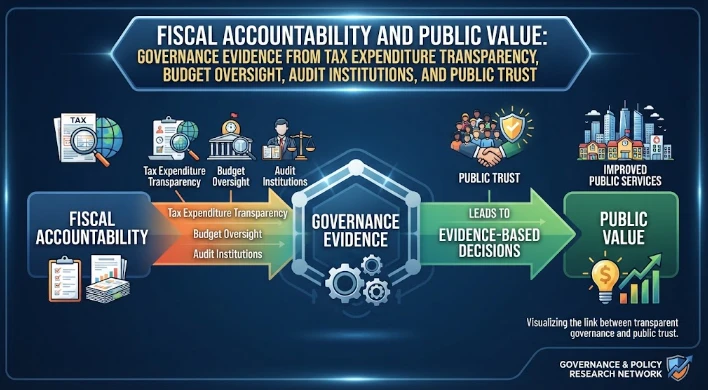
However, independent institutions and legislatures will be more effective in budget oversight when they have access to the same assumptions as the executive. Fiscal transparency is more than a big document once decisions have been made, the information must be detailed, timely and sufficiently consistent for meaningful challenge. Audit institutions provide a further level of scrutiny of lawfulness, control, effectiveness and utilization of public funds within the parameters of their statutory powers. What is achieved by the audit work is a change of behaviour, which is measured by independence and access to evidence and by follow-up on findings.
Gross versus net gaps, modelling uncertainty and administration effect should be distinguished. The net gap may still be negative despite high risk, and an economic shock may cause a change in either liabilities or payment capacity. Methods must be stable or revisions transparent in time series interpretation. Transparency and method robustness enhance the value of gap estimates—it is easier for stakeholders to see what is and isn't being established with the numbers.
This is demonstrated by published tax-gap estimates in Australia, as part of their tax design, not separate from it. In November 2024, the ATO released its estimates of the 2022-23 net GST shortfall is approximately 7.9 billion Australian dollars, or around 9 per cent of the theoretical amount of GST. The agency also said there had traditionally been a significant proportion of the gap in the GST from the small business sector and that there was a lot of risk in the areas of record quality, cash transactions and registration behaviour. Even an estimate of the gap does not tell administration what caused the gap, which is why it is important to have other evidence before assuming that a gap is equivalent to an error, a payment problem or deliberate concealment.
The deterrence model is complicated by behavioural evidence. Penalties and audit probability are important, but so is compliance given clarity, trust, perceived fairness, social norms, cash-flow pressure and ease of completing obligations. OECD tax-administration work documents growth of the use of behavioural researcher and targeted communications. In aggregate data, if a reminder is sent at the right time, no error will occur; if it is not sent at the right time, an error will occur at a cost of only a few lines of code as opposed to many lines of code in complex rules.
It is important to also consider the cost of compliance as administrative hassle can drive small businesses into making mistakes and doing informal work. Interpretation of rules, record keeping, reconciling GST and correcting returns is an economic cost (even if there is no extra tax to be paid). While digital filing can alleviate the burden of routine, it's only if software, identity systems and data standards are reliable. The sloppy development of electronic tasks may just shift costs from government agencies to businesses and professional advisors.
Public trust is used to link those institutions. In 2024, OECD trust research highlighted the importance of transparent and verifiable evidence, checks and balances, and credible explanation of policy decisions as key elements of building trust in public institutions. Citizens make this comparison between compulsory payments and perceived public value and fairness, particularly in the context of tax policy. This can thus enhance fiscal management and the acceptance required for sustainable revenue generation through publishing tax expenditures, improving budget oversight, and reacting to audit results.
Risk segmentation provides a more proportionate model. In the case of simple errors, a taxpayer should be educated and corrected; for taxpayers who are temporarily experiencing tax payment stress, a more flexible approach is needed; and for taxpayers who are purposefully hiding tax information, increased verification effort should be used. If every discrepancy is treated as a case of fraud, it's using enforcement resources that could be better spent otherwise and endangers the voluntary compliance effort. Tackling every mismatch as harmless results in exactly the opposite issue—deterrence and fairness is reduced for taxpayers who do not need to step in.
Special rules add to the boundaries that affect compliance, as do tax expenditures. Classification questions and planning opportunities arise from deductions, exemptions, reduced rates and sector concessions. The more boundaries that can be added, the more real uncertainty and aggressive interpretation. The fiscal authorities should therefore consider tax expenditures in part from an administrative perspective: a tax concession that makes little policy sense but is very complex may cost more than the number of tax dollars that is estimated in a budget statement.
An effective compliance program, therefore, is a mix of prevention, facilitation, verification and enforcement. Omissions can be avoided, fewer errors can be made with pre-filled data, high risk cases can be targeted with analytics, and robust sanctions can help with intentional evasion. There are four yardsticks for each intervention: revenue, burden, fairness, trust. To achieve this it is not about enforcing at every opportunity, it is to achieve sustainable compliance at a minimum social and administrative cost.
When public authorities make estimates as statements of uncertainty, rather than predictions of future behaviour or revenues, this increases the credibility of the estimates. Institutional capacity for changing thresholds, processes and reporting obligations when evidence shifts is thus crucial to long-term reform. A durable system is one that is both accessible and has a clear procedure and accountability, while protecting revenue. These are then kept within one analytical frame through a sound evaluation.
The test to be applied is what public value would be achieved if the cost of the rule to the public, in monetary terms, the burden of compliance, and the unintended consequences of the rule are taken into account. Assumptions, definitions, limitations, and the criteria by which review will be conducted are easier to use to provide transparency when a policy is not yet difficult to change. That holistic strategy also guards against singling out one headline measure as an indicator of fairness, efficiency, or responsible behaviour.