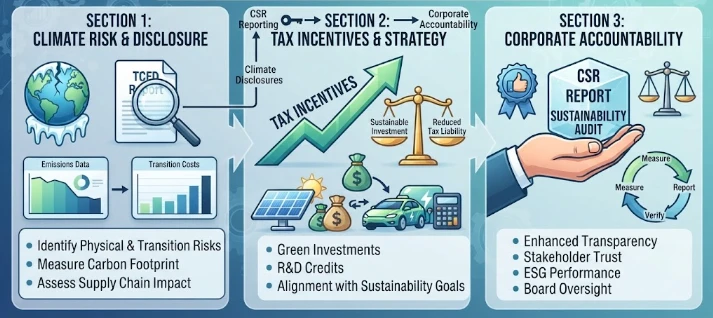
This article links climate risk, tax incentives and corporate accountability through sustainability reporting and climate-related disclosure. Physical hazards and transition policies can affect asset values, supply chains, insurance, operating costs and public budgets, while tax systems influence the transition through carbon pricing, investment allowances, accelerated depreciation and targeted credits. The article highlights IFRS S1 and IFRS S2 as frameworks that connect governance, strategy, risk management, metrics and targets with physical and transition risks, giving boards, investors and tax authorities more structured information for assessing green investment claims. Distribution remains important because climate shocks and energy taxes do not affect households or regions equally. Targeted transfers, refundable credits and public investment can address some unequal burdens. The article also examines resilient infrastructure, climate-adjusted cost-benefit analysis, guarantees, concessional finance and the allocation of risk between taxpayers and private investors. Corporate performance should be evaluated over a horizon long enough to capture transition costs and resilience benefits. Strong accountability requires consistency between tax incentives, capital expenditure, climate disclosures, financing arrangements and measurable environmental outcomes.
Physical hazards and transition policies can alter public budgets, supply chains, insurance provision, operating costs, and asset values, making climate risk a fiscal and corporate-governance challenge. Policy changes in the decarbonisation framework shift relative prices in energy, transport, buildings and industry, and direct costs arise from floods, heat, storms, droughts and losses resulting from wildfire. These tax systems are nestled within that adjustment, including carbon pricing, investment allowances, excise design, accelerated depreciation and targeted credits. A sound economic structure thus relates climate economics to tax incidence and accountability, and not as isolated "concessions.
Climate-related disclosure has shifted from a voluntary reporting practice to a certain structure in the financial-accountability reporting system. The IFRS S1 and IFRS S2, which were issued in 2023 and will be effective from annual reporting periods beginning in 2024, group material sustainability information under governance, strategy, risk management, metrics and targets. IFRS S2 is dedicated to climate-related risks and opportunities, such as physical and transition risks. That way, tax authorities, investors, and boards have more of a foundation to compare the claims of green investments to capital expenditure, financing, and risk.
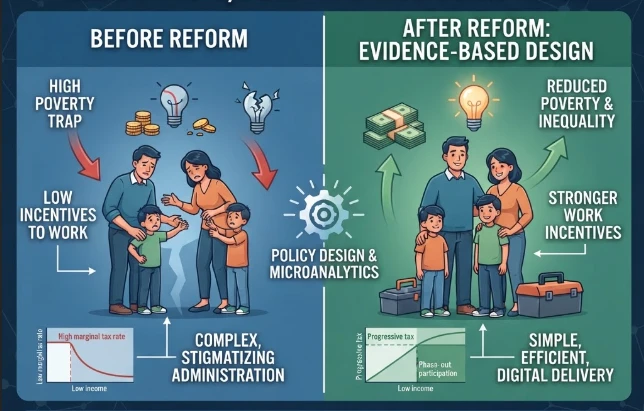
The significance of distribution arises from the fact that climate policy is not evenly distributed across income groups and climate shocks are not uniformly distributed across income groups or regions. For lower-income families, energy taxes may take a larger bite out of current income, whereas higher-income families may be able to afford to invest in efficiency, such as efficient vehicles, insulation, rooftop generation and more. Those imbalances can be minimized through targeted transfers, refundable credits and public investment. Management analysis based on incidence analysis should be performed based on household budgets after taxes, prices and compensation and not solely because of the environmental label of an instrument.
The same discipline is needed to make public investments decisions. Incorporating resilient infrastructure features can, at a higher initial investment, lower expected losses, service interruption, and reconstruction costs throughout the lifespan of an asset. When disaster likelihood, network effects or distribution impacts are not considered, that value may be undervalued in a conventional appraisal. The climate adjusted cost benefit analysis provides finance ministries with a more solid foundation for comparing prevention costs with the costs of repeated repair. However, transparent assumptions remain crucial as hazard projections and discount rates can make a significant difference in results.
Climate finance adds another layer of accountability because it involves a transition of risk from taxpayers to private investors through public guarantees, concessional loans, blended finance and tax incentives. It can give rise to projects that involve significant social gain, without the downside risk being socialised, and with most of the upside remaining private, as long as the contracts are weak. Fiscal control is enhanced by clear additionality tests, performance milestones, clawback provisions and disclosure of contingent liabilities. The more the risk sharing is made explicit, the more effective the public support will be.
The period of time over which firm performance should be evaluated should be long enough to include the transition costs and the benefits of resilience. While investments in the environment can lower energy costs, regulatory exposure or disruption risks, early investments can also lower accounting returns in the short run. A narrow measure of profitability over a one year period can thus be a punishment for investments of long-term value. Simultaneously, not all environmental projects are good for competitiveness, and claims need to be supported by evidence of productivity, operating cost, revenue quality, financing conditions and risk reduction; rather than general statements about sustainability.
EU sustainability reporting regulations introduced yet another facet. European Sustainability Reporting Standards set the reporting requirements for 2024 financial years and the first companies in scope must start reporting in 2025 in force of the Corporate Sustainability Reporting Directive 2023. The model structure brings sustainability information into the proximity of management reporting and assurance, instead of having it as a separate corporate brochure. For tax incentives, that's important as claimed environmental benefits can be compared to disclosed plans for transition, emissions, governance, and investment.
The administration of taxes also plays a role in green incentives. Qualifying can be based on technical factors like emission intensity, equipment type, project timing, or certification. Revenue officials require more than just the standard accounting documentation, and companies require transparent documentation guidelines prior to investments. Pre-approval, standardized certificates, exchange of information with sector regulators, and post-claim verification can help minimize uncertainty. Reducing complexity can enhance the take-up of the design without compromising the integrity of the design when the qualifying conditions are similar to measuring outcomes.
A good climate-tax policy will therefore have an exit strategy. An incentive that is a sound business decision at the time of its introduction may not be required or beneficial later, due to evolving technology costs, market penetration, carbon prices or changes in regulation. The opportunities for review of rates and eligibility before the fiscal cost is politically entrenched come with sunset clauses and scheduled evaluation. The most suitable instrument is not determined by preference for tax measures but instead by the type of barrier.
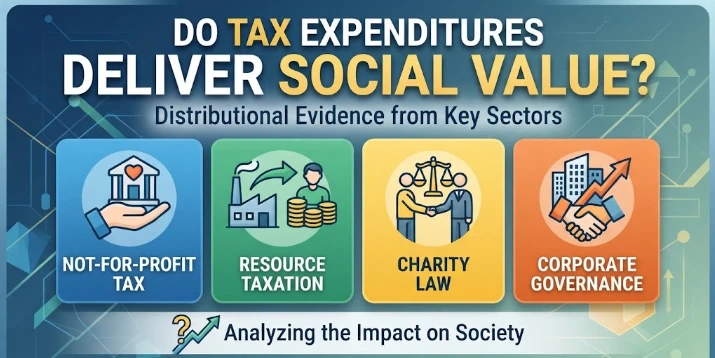
If the activity is subject to a clear market failure and if the criteria for eligibility to the environmental tax change are clearly drawn, environmental tax incentives can promote investment. Poorly structured incentives may incentivize projects that are already commercially viable, may result in relabelling, and/or may incentivize firms with greater tax capacity rather than the greatest environmental benefit. Actual access is impacted by carry-forward rules, investment thresholds, refundability, and interaction with grants. There needs to be a scorecard for evaluation that includes the following: additionality, emissions outcomes, distributional impacts, fiscal cost, and administrative complexity.
The quality of sustainability information is increasingly becoming a key determinant of corporate accountability. IFRS S1 and IFRS S2, which were released in 2023 and will not impact annual reporting periods starting in 2024, are structured around governance, strategy, risk management, metrics and targets. The importance of the architecture for tax policy, as a claimed tax incentive to promote green investments is much easier to test if there is consistent reporting of capital spending, transition plans and climate exposures.
The greenwashing risk remains in CSR reporting where good-looking indicators are not linked to economic substance. A company could sing the praises of a project that has lower carbon emissions, and then still have high-carbon capital expenditures in play, or they could report their operational carbon emissions but not be able to see the important value-chain effects. Sustainability accounting enhances the discipline by linking nonfinancial aspects with financial impacts and decision making processes. Where tax relief, climate claims, project economics and board oversight all tell a similar story in the reporting systems, there is corporate accountability.
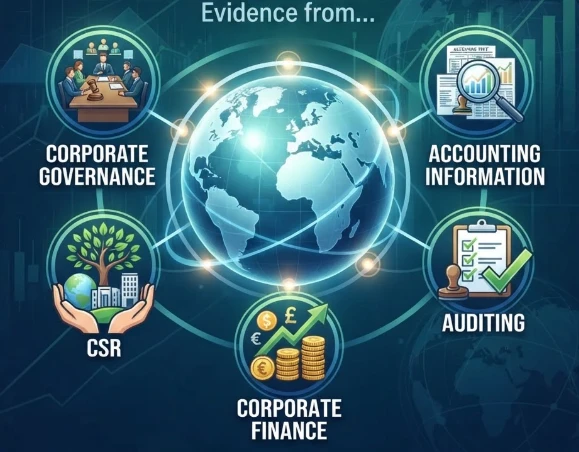
Social and environmental accounting goes beyond the traditional accounting for profit. The economic impacts of energy use, emissions, impacts to the workforce, community exposure, impacts to biodiversity and remediation obligations only show indirectly through normal financial ratios. Environmental accounting is not a substitute for financial accounting, but provides extra information to help determine if reported performance is influenced by unpriced external costs. Tax incentives made in the light of such information can help to facilitate better capital allocation and, in the absence of strong measurement, fiscal support can become a brand subsidy.
Useful warning from Critical Accounting theory of power and framing. Choices regarding materiality, boundaries, baselines, and metrics affect what is revealed in disclosure systems. A company may be achieving a reduction in emissions from its operations but a corresponding increase in its supply chain, or point to a small green portfolio and a high-carbon business unchanged. It is, therefore, essential that fiscal authorities have definitions that are outside of promotional narratives and verifiable with tax records, engineering evidence, or recognised reporting standards.
The public-finance question becomes the tail-risk issue as well, with climate and disaster economics. A crisis can be accompanied by a decline in tax revenues, while emergency spending, reconstruction, health expenditures and social protection requirements all increase. Disaster risk financing aims to provide liquidity following disasters through the use of disaster reserves, contingent credit, insurance, catastrophe cover and budget reallocation. The goal is not only for the pain to be reduced, but also to ensure that the fiscal adjustment process doesn't disrupt the economy when its normal sources of revenue fall short.
The robust accountability assessment is uniformity of tax reporting, financial reporting, sustainability reporting, investment decisions, and environmental results. When a firm with a strong claim to climate leadership uses murky incentives or low standards for performance, or a government that touts the benefits of green investment but doesn't disclose the financial costs, they both run the risk of credibility. Good policy is grounded in real data, distribution issues and discipline of public budgets. Together, it transforms climate taxation into a tangible component of the economic transition strategy.
CITE THIS ARTICLE
Sultana, K. R. (2025). Climate Risk, Tax Incentives, and Corporate Accountability: Evidence from CSR reporting, climate-related disclosures, sustainability accounting. https://researchbysultana.com/article/5165bc27-3581-5544-86b8-9905834186e3
K. R. Sultana, “Climate Risk, Tax Incentives, and Corporate Accountability: Evidence from CSR reporting, climate-related disclosures, sustainability accounting,” 2025. [Online]. Available: https://researchbysultana.com/article/5165bc27-3581-5544-86b8-9905834186e3
Sultana, K. R. (2025) ‘Climate Risk, Tax Incentives, and Corporate Accountability: Evidence from CSR reporting, climate-related disclosures, sustainability accounting’. Available at: https://researchbysultana.com/article/5165bc27-3581-5544-86b8-9905834186e3
Sultana, Kazi Rukaiya. “Climate Risk, Tax Incentives, and Corporate Accountability: Evidence from CSR reporting, climate-related disclosures, sustainability accounting.” 2025, https://researchbysultana.com/article/5165bc27-3581-5544-86b8-9905834186e3.
Kazi Rukaiya Sultana. “Climate Risk, Tax Incentives, and Corporate Accountability: Evidence from CSR reporting, climate-related disclosures, sustainability accounting.” (2025). https://researchbysultana.com/article/5165bc27-3581-5544-86b8-9905834186e3.
Sultana KR. Climate Risk, Tax Incentives, and Corporate Accountability: Evidence from CSR reporting, climate-related disclosures, sustainability accounting. 2025. https://researchbysultana.com/article/5165bc27-3581-5544-86b8-9905834186e3
@misc{article_5165bc273581554486b89905834186e3,
  title = {Climate Risk, Tax Incentives, and Corporate Accountability: Evidence from CSR reporting, climate-related disclosures, sustainability accounting},
  author = {Kazi Rukaiya Sultana},
  year = {2025},
  url = {https://researchbysultana.com/article/5165bc27-3581-5544-86b8-9905834186e3},
}
TY  - GEN
AU  - Kazi Rukaiya Sultana
TI  - Climate Risk, Tax Incentives, and Corporate Accountability: Evidence from CSR reporting, climate-related disclosures, sustainability accounting
PY  - 2025-05-11
UR  - https://researchbysultana.com/article/5165bc27-3581-5544-86b8-9905834186e3
ER  -
This article uses institutional economics and applied microeconomics to show why tax-transfer reform cannot be evaluated from policy rules alone. Household disposable income reflects earnings, taxes, contributions, benefits, housing support and withdrawal schedules, but the effectiveness of those rules also depends on institutions that administer them. Different data systems, delayed appeals, inconsistent local delivery and administrative capacity can cause a theoretically efficient policy to wo
This article presents tax transparency as a governance and accounting issue rather than a simple disclosure exercise. Boards oversee tax outcomes that are influenced by risk appetite, capital allocation, internal controls, remuneration and significant transactions, while accounting systems provide the common record connecting financial profit, taxable income, deferred tax, cash tax and uncertain positions. IFRS S1 and IFRS S2 are used to show how sustainability-related financial information can
This article evaluates tax expenditures in not-for-profit, charity and resource-tax settings through distribution, governance and public value. Preferential treatment for charities and similar organisations is justified by public or community benefit, so reporting and governance should show whether concessions expand valued services, improve access or instead accumulate as private or organisational advantage. The article warns that annual income alone is an incomplete equity measure because life